

prof. Polat Goktas
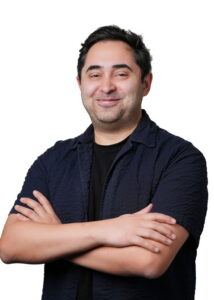
SPEECH TITLE: “Trustworthy AI for Healthy Longevity: Secure, Inclusive, and Human-Centred AgeTech“
SPEECH DATE: September 23, 2026
BIOGRAPHY
Polat Goktas is an Assistant Professor in the Faculty of Engineering and Natural Sciences at Sabancı University, Istanbul, Türkiye. His research focuses on responsible and trustworthy artificial intelligence (AI), AI governance, machine learning, edge AI, and intelligent systems for healthcare, environmental sustainability, smart cities, and public decision-making.
He received his Ph.D. in Electrical and Electronics Engineering from Bilkent University and was a Fulbright Doctoral Research Fellow at Harvard University. Before joining Sabancı University, he was a Marie Skłodowska-Curie Career-FIT PLUS Fellow and AI Scientist at the Centre for Applied Artificial Intelligence, University College Dublin. His honors include the Marie Skłodowska-Curie Postdoctoral Fellowship, the Fulbright Doctoral Research Fellowship, the IEEE Doctoral Research Grant, the METU Serhat Özyar Young Scientist of the Year Award, and the Young Scientist Award at the 66th Lindau Nobel Laureate Meeting.
Dr. Goktas actively contributes to the international research community through editorial and leadership roles. He serves as Area Editor of the ACM Journal on Computing and Sustainable Societies, Associate Editor of IEEE Climate Magazine and Fulbright Chronicles, Academic Editor of PLOS ONE, and Managing Editor of the Marie Curie Alumni Association (MCAA) Newsletter. He is also a member of the editorial boards of Scientific Reports, Health Policy and Technology, BMC Health Services Research, Journal of Health Organization and Management, Sustainable Futures, and AI, Computer Science, and Robotics Technology. He serves as Chair of the IEEE Young Professionals Innovation Subcommittee, Chair of the IEEE AgeTech Innovation Challenge Committee, Chair of IEEE AgeTech Global Dataset Competition, Competition Chair of the IEEE Metaverse Grand Challenge for Simulation-Based Learning, Community Lead for Regional Engagement at IEEE Entrepreneurship, and Chair of the European Union – MCAA Turkey Chapter, while contributing to several IEEE initiatives on responsible AI, innovation, and technology policy.
ABSTRACT
As populations age, artificial intelligence (AI) is creating new opportunities to support healthy longevity through wearable technologies, clinical decision-support systems, assistive solutions, and personalised health monitoring. However, the impact of AgeTech depends not only on algorithmic performance but also on the security, privacy, representativeness, and responsible governance of the data used to develop these systems.
This keynote will explore how trustworthy and human-centred AI can support older adults while addressing critical challenges such as health-data security, algorithmic bias, explainability, accessibility, and the responsible use of multimodal and real-world datasets. It will also highlight the role of interdisciplinary collaboration and global data initiatives in developing inclusive AI systems that respond to the diverse needs of ageing populations.
The presentation will also introduce IEEE AgeTech and its international activities, with particular attention to the IEEE AgeTech Global Dataset Competition as a mechanism for encouraging responsible dataset development, improving data availability, and advancing secure and inclusive innovation for healthy longevity.
prof. Grégoire Danoy
SPEECH TITLE: “Automating the Design of Autonomous Robot Swarms”
SPEECH DATE: September 23, 2026
BIOGRAPHY
Grégoire Danoy is an Assistant Professor in Computer Science at the University of Luxembourg, where he heads the Parallel Computing and Optimisation Group (PCOG) and leads the Swarm Intelligence Lab.
His work brings together machine learning, swarm intelligence, and multi-objective optimisation to develop new approaches to automated algorithm design, with applications ranging from drone swarms to space systems. He has authored more than 150 research articles in leading international journals and conference proceedings. He leads national and international collaborations with academic, industrial, and governmental partners, and has contributed to projects supported by Luxembourg’s National Research Fund (FNR), the US Navy / US Air Force, and the European Defence Agency.
ABSTRACT
Designing autonomous robot swarms requires balancing competing objectives, such as maximising area coverage while preserving communication between robots. Evolutionary optimisation can address these trade-offs, yet designing effective optimisation algorithms remains a challenging task that relies heavily on expert knowledge and experimentation.
This keynote explores the transition from manually designed evolutionary algorithms for multi-objective swarm optimisation to automated algorithm design enabled by new machine learning approaches. It presents a series of research contributions illustrating how learning methods can progressively automate the construction of optimisation strategies and support the emergence of effective collective behaviours. Through examples from autonomous robot swarms, the talk discusses the methods enabling this transition, and the opportunities and challenges they raise for the design of autonomous systems.
prof. dr hab. Marcin Paprzycki
SPEECH TITLE: “An LLM supporting doctors and patients”
SPEECH DATE: September 24, 2026
BIOGRAPHY
Marcin PAPRZYCKI, Systems Research Institute Polish Academy of Sciences. He has an MS degree from the Adam Mickiewicz University in Poznań,
Poland, a Ph.D. from the Southern Methodist University in Dallas, Texas, USA, and a Doctor of Science degree from the Bulgarian Academy of Sciences, Sofia, Bulgaria. He is a Senior Member of the ACM, a Senior Member of the IEEE, he was a Senior Fulbright Lecturer, and an IEEE CS Distinguished Visitor. His original research interests were in the area of high performance computing / parallel computing / computational mathematics. Over time they shifted towards intelligent systems, software agents and agent systems, and application of semantic technologies, among others. Currently he serves as IEEE Poland Section
Conference Coordinator. He has contributed to more than 500 publications, and was invited to the program committees of over 1000 international conferences. He is on the editorial boards of 12 journals.
ABSTRACT
INFERMed 2.0: towards an LLM supporting doctors and patients
Pranjul Mishra, Michał Fila, Marcin Paprzycki, Maria Ganzha
Drug–drug interaction (DDI) resources commonly provide predefined interaction classifications or severity warnings, while offering limited support for explaining why an interaction may occur. This becomes increasingly important in polypharmacy, where clinically relevant effects may arise from pharmacokinetic (PK) mechanisms, pharmacodynamic (PD) overlap, or combinations of multiple biological and safety signals. INFERMed addresses this problem through an evidence-grounded retrieval-augmented generation framework designed to support interpretation, not replacing clinical judgement.
The system integrates heterogeneous evidence covering drug identity and chemistry, targets and pathways, clinical labels, curated interaction knowledge, and pharmacovigilance observations. Sources used across the system include PubChem, RxNorm, UniProt, KEGG, Reactome, ChEMBL, DrugBank-derived data, TWOSIDES, DILIrank, DIQT, DailyMed, OpenFDA/FAERS as well as additional biomedical resources. Retrieved evidence is normalized into drug profiles and structured relationships describing enzymes, transporters, targets, pathways and safety observations. These profiles support PK/PD reasoning over drug pairs and larger medication sets, after which a grounded large-language-model component generates explanations adapted for patients, clinicians and pharmacovigilance-oriented users. Evidence provenance, uncertainty and the distinction between retrieved observations and inferred mechanisms are preserved throughout the reasoning process.
The refined system was evaluated on the same 50 historical interaction cases previously used to assess the original INFERMed (1.0) implementation, including drug–herb combinations. Using a 10-point rubric covering mechanism of correctness, grounding, clinical monitoring/actions and clarity, the refined system achieved a mean score of 6.72, compared with 4.88 for the original INFERMed responses and 5.82 for the preserved Drugs.com responses. The strongest improvements were observed in mechanistically interpretable PK- and PD-driven cases. In addition, 33 migraine-treatment combinations supplied by a medical specialist were examined, including two-, three- and four-drug regimens. Initial clinical review, performed by a single migraine specialist, found the explanations broadly aligned with everyday clinical experience and considered the mechanistic explanations useful, while also noting that some risk descriptions (reported by INFERMed) were more conservative than clinical judgement. These results suggest that mechanistic RAG can provide a useful explanatory layer over heterogeneous drug-safety evidence. However, automated evaluation does not establish clinical accuracy, source coverage remains uneven, observational safety signals do not demonstrate causality, and patient-specific decisions continue to require expert assessment. Future work will, therefore, focus on structured blinded clinical evaluation, stronger evidence grounding, richer patient context and deeper multi-drug reasoning.